A year ago the Test, Learn and Grow (TLG) programme launched our first accelerator projects. Last month we marked that anniversary with an event bringing the whole programme together and the launch of our new TLG Playbook, informed and shaped by the on the ground learning from our accelerators over the past year.
Rather than tell the story ourselves, we asked each accelerator team to share in their own words what they set out to do, a moment from the year that's stuck with them, and what they're carrying forward.
Northumberland and Manchester: integrated family support
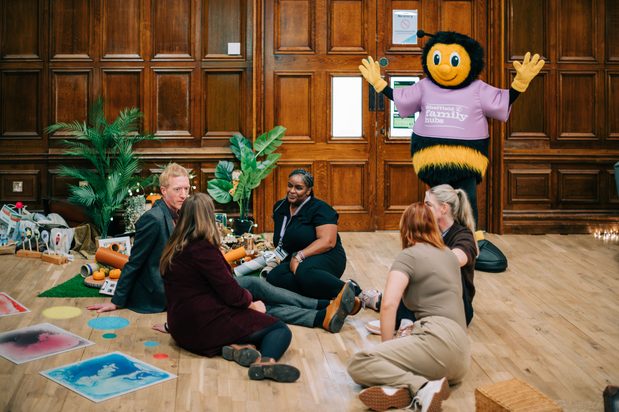
Lesley Grieve, Test, Learn and Grow Project Lead at Northumberland County Council
We launched our accelerator in autumn 2025 to help meet one of the Government's top priorities, getting 75% of children to a Good Level of Development by 2028. Family Hubs had a central role to play, but good support was not always reaching the families who needed it most.
Rather than designing a solution centrally, we started by listening to parents, frontline workers and local partners to meet them in places where they were. In Northumberland, one idea rose to the top: short "Ready to Learn" sessions for two-year-olds, delivered in schools by Family Hub staff. We set out to test how we identify families, how we invite them, and how we deliver sessions.
Going back to parents directly changed everything. They wanted trusted messengers, not official channels, and flexible sessions, not a long programme. They cared about their immediate struggles at home like behaviour and potty training, not generic content. And sometimes their biggest stress wasn't development at all, it was not knowing school application deadlines or how to apply for nursery funding. Starting small and really understanding the needs of families meant our failures were cheap, saving an estimated £35,000 in staff costs, and meant we built something with parents, not for them.
Wakefield: economic inactivity
Sharon Marshall, Employment Strategy Manager at Step-Up (Wakefield Council’s in-house employment service)
More than a million young people aged 16 to 24 are not in education, employment or training. While the Get Britain Working White Paper sets out the government's wider ambition to tackle this, and Milburn’s Review is investigating the root causes, the Wakefield accelerator set out to test what actually works.
Working as a blended team, TLG colleagues reset how local and central government work together, and let young people's own experiences set the direction, rather than consultation alone. TLG colleagues fitted into the local offices really well with other colleagues asking “Who are that team?” and “Aren’t they really good?” which has challenged a lot of people’s perception of what a Cabinet Office civil servant looks like.
Our focus is now testing how work experience can work better for both employers and young people, and how to give more holistic support that meets them where they are.
From the outset, the team's genuine enthusiasm for making real changes to reduce and prevent youth unemployment in Wakefield has been clear. After 40 years in local government, working as part of a blended team with TLG colleagues has put the fire back in my belly.
Barnsley and Essex: AI and data support to the frontline
Nicky Arnold, Senior Service Designer, Test, Learn and Grow, Cabinet Office
This accelerator set out to explore how data and AI could support a shift toward prevention in children's services, so families get the right support at the right time. We worked with Barnsley Children's Services to map the system we were testing in.
Our service designer spent time in Barnsley having conversations with these professions with social work experience, which started as technical and process-driven became something deeper. Social workers shared stories of children and families that had stayed with them, and the difficulties of advocating for them, giving our team an in-depth understanding of the real challenges people face in this complex area. Building that trust, before anything else, turned out to be the work itself, not a step before it. We carry that into year two as we find our place in the overlap between test and learn, AI, and children's services.
Liverpool and Plymouth: neighbourhood health
Josh Lowe, Senior Service Designer, Test, Learn and Grow, Cabinet Office
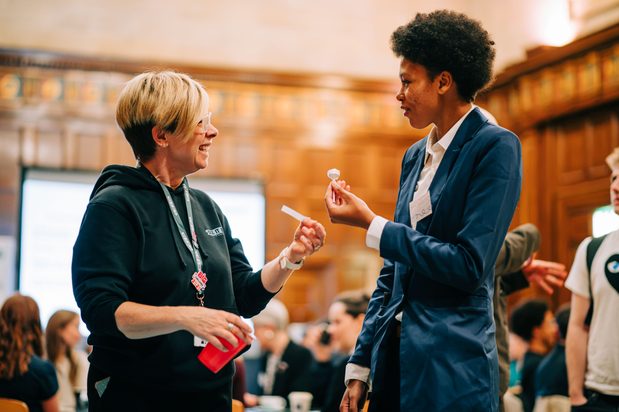
Have you, or someone you love, ever had a serious health problem? Sometimes, severe conditions are sadly unavoidable. But most of us know people who could have escaped a terrible experience if the right support had been accessible nearby, or if different professionals had brought their insight together at the right time. This is what the government’s Neighbourhood Health agenda - and our accelerator - hopes to tackle: how to make sure healthy lives are created and sustained in the places people live, meaning fewer of us have to rely on intensive services like hospital care.
There are so many moments of joy - and moments of frustration - that stick with us from our work with our brilliant partners in Liverpool and Plymouth. But one is our first visit to the SWAGGA Primary Care Network, one of our operational partners in delivering a preventative respiratory healthcare test in South Liverpool. A banner in the lobby of one of their neighbourhood hubs reads: “We don’t look for reasons why something can’t be done. We look for solutions that make it possible.”
That sentiment sums up the work of so many amazing professionals in Liverpool, Plymouth, and elsewhere, often working against the system to bring together the right professionals in the right places to meet people’s needs. Our mission for the next year and beyond is to explore how the system might start to shift to working with them, so that joined-up, preventative and person centred care becomes routine, not the exception.
Sandwell and Nottingham: SEND employment transitions
Lauren Abraham, Senior Service Designer, Test, Learn and Grow, Cabinet Office
When young people with SEND (Special Educational Needs and Disabilities) leave education, their support, relationships and structures around them can disappear overnight. For too many people this leads to poor employment, health and independence outcomes, which are costly to reverse and hard on the young people and families involved.
The Government set out ambitious SEND reforms in the Schools White Paper. The TLG SEND accelerator partnered with Sandwell and Nottingham to test, in real places, with real young people, how reforms might actually work for the young people and families living it.
The moment that stuck with us came early. We ran two co-design workshops with young people with SEND at Sandwell College, deliberately spaced apart so they'd get to know us before the second, deeper conversation. They mapped their own journeys, the people who'd helped them, and what good support should look and feel like. They were generous with experiences that weren't always easy to share, and what they told us is already reshaping how we think about identifying young people before things go wrong. That's carried through everything since, listening first, designing second.
Islington: Violence Against Women and Girls (VAWG)
Aisling Barker, VAWG Operational Adviser, Test, Learn and Grow, Cabinet Office
When the UK’s VAWG strategy was launched in December 2025, the pledge to halve VAWG in 10 years remained an ambitious and welcome goal. But how can test and learn ways of working help? This is a broad goal that required the accelerator team in Islington to narrow down to find a starting point to test.
We launched in Islington in January 2026 and spent five months speaking to frontline practitioners and, crucially, to survivors of domestic abuse about what should change.
Our workshops surfaced many ideas and themes. The need to support children experiencing domestic abuse at home was a theme that came out of our research, and Islington felt it connected with their own strategy. We learned that our job was not to pick the best one, but to break it down into something small enough to test safely and low-cost.
We are now testing ways to bring support to children affected by domestic abuse who are not in contact with statutory services, working alongside practitioners, who know this work inside and out, and carry the voices of survivors with them every day, and survivors themselves through Islington Voices for Change.
That's six places, ten teams, and many different versions of the same lesson: start small, listen hard, and let what you learn change what you do next. There are more stories like these across the programme, so follow the blog to stay updated. And if you want to get more involved in testing, learning and growing with us, join the TLG Network.
Leave a comment