Test and learn is a way of working, often used in the digital sector, that starts small to see what works and what doesn’t. It takes a measured approach to risk and embeds continuous learning, keeping work focused on outcomes to make things better for people.
The Test, Learn and Grow (TLG) Programme aims to implement these ways of working at a larger scale, enabling local and central government to use this approach. The three-year UK-wide programme aims to model and scale an approach to public service delivery that closes gaps between policy, delivery and service users and speeds up cycles of learning and improvement.
Test and learn is a method, but a very flexible one, and we see it as a framework that draws from other traditions and disciplines which are about brave and bold public work. We draw lots of inspiration from things like relational practice, human learning systems, and place-based working and are excited by the prospect of integrating these approaches.
Test and Learn and Grow
The programme has two main strands - the Test and Learn ‘Accelerators’ and ‘Grow’:
- The Accelerators will design, test and scale innovations that accelerate government mission delivery and support public service reform, delivered in partnership with departments and places. These will focus on different public service challenges, ranging from integrated family support to violence against women and girls.
- The Grow part of the programme will focus on addressing the underlying constraints to reform, many of which sit in the centre, and enabling localities to better share and grow the innovation which we know is already taking place. These constraints include the lack of join up on funding streams and poor data infrastructure which impede innovation.
We want to use the energy around test and learn to change how public services are delivered and improved, and to challenge entrenched ways of working across government. As part of this, we have set up a TLG Network to bring together local and central government and other public sector organisations to share best practice. Please sign up via LinkedIn.
A Short History of TLG
‘Demonstrator pilots’ and programme design (October 2024 to July 2025)
The TLG programme was first announced at the Autumn Statement 2024 with further details set out in a speech by the then Chancellor of the Duchy of Lancaster (Pat McFadden) in December at the UCL East Campus in London.
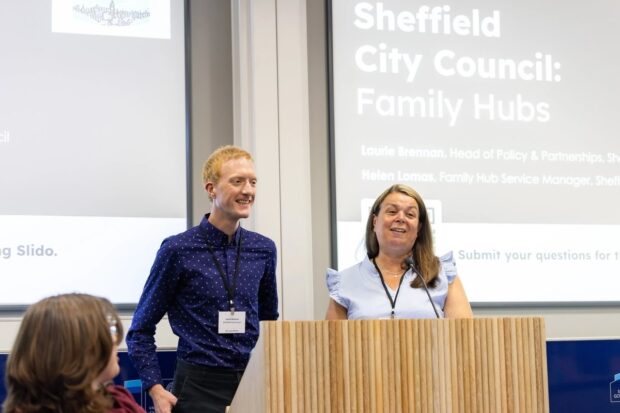
In January 2025 we launched four 12-week demonstrator pilots known as ‘wave 1’ to inform the design of the full scale programme and test our proposed ways of working. We conducted these with Manchester, Sheffield, Liverpool and Essex - focusing on Family Hub outreach and temporary accommodation services.
During this period, the TLG team learned how to set up good partnerships with places, what roles are needed in accelerator teams, and how to apply test and learn to cross-cutting policy challenges involving departments and other public sector bodies. The team also learned about the barriers which frontline delivery and other teams might face in taking a test and learn approach and took back findings from all four places to central government to inform wider policy development.
We wanted to ensure the programme actually worked for those delivering in place, so we also started a process of co-design with local government and others. This was an important part of our commitment to working in the open, one of our core TLG principles.
We undertook this process by collaborating with the Local Government Association (LGA) on a series of design workshops, scoping ‘what’ the aims of the programme should be, ‘who’ we should work with and ‘how’ we should deliver the programme. The collective views of the group helped shape the full scale programme and were included in Ministerial decision making.
Getting started with our partners (July 2025 until now)
Informed by the co-design process, we undertook place selection for the TLG accelerators in England - selecting ten partners: Barnsley, Wakefield, Manchester, Liverpool, Sandwell, Northumberland, Essex, Plymouth, Nottingham and London.
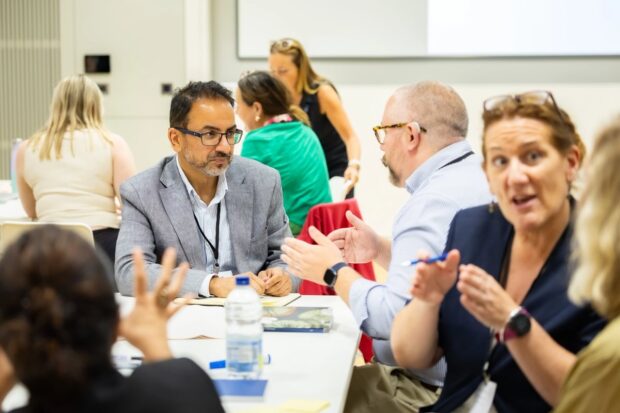
We then held our inaugural TLG event in July at the Blavatnik School of Government in Oxford with our new partners and the wider test and learn community.
In the Autumn we started launching our accelerator projects with our ten partners, each focused on one of six policy challenges, that we agreed across government earlier in the year:
- Barnsley and Essex - AI and data support to the frontline
- Islington - Violence against women and girls
- Liverpool and Plymouth - Neighbourhood Health
- Nottingham and Sandwell - SEND (Special educational needs and disabilities) employment transitions
- Northumberland and Manchester - Integrated family support
- Wakefield - Economic inactivity/ Inclusive employment
We will write future blog posts focused on our progress across each of these projects.
What we’ve learnt as a programme team
- Bringing together central and local government teams behind a common vision and outcome can drive progress, even in a short amount of time. Having a clear and refined focus can help bring these groups together.
- Using information from users to make ‘real time’ changes to practice and delivery can enhance services and change lives - rather than writing up a report on findings. People get really excited and energised when it feels like their ideas can be tried out in practice and help shape reality.
- That we need more time to scope out potential projects with places - in the demonstrator pilots we only had a very short window which prevented in-depth work to understand the problem and design and test potential solutions.
- Communication matters and we need to make sure when we talk about TLG we recognise the innovation already happening in places.
- Multi-disciplinary teams made up of central and local government bring a diverse range of expertise to enable a well rounded approach to a challenge.
- Test and learn is a lot of fun! It’s collaborative, dynamic, and teams can quickly see the progress and impact of their work.
Let us know in the comments what you think, and join the TLG Linkedin community to learn and share with the TLG network.
4 comments
Comment by Jordan Example posted on
Thanks for explaining the programme. Is there a place to see examples from pilot teams?
Comment by author posted on
Hi Jordan,
thanks for your comment! Our aim with this blog page is to use it as a place to provide updates on the pilots, so please sign up to alerts to keep updated.
You can also also follow our LinkedIn community page where there are regular updates from us, our pilot teams, as well as other people working on test and learn approaches: https://www.linkedin.com/groups/16090028/.
Comment by Morgan Reader posted on
Where will teams share outcomes from the first phase?
Comment by author posted on
Hi Morgan, we hope to use this page as place to provide updates on this so please sign up to alerts to keep updated.
We also have our LinkedIn community page you can follow where there are more regular updates from us, our pilot teams, as well as other people working on test and learn approaches: https://www.linkedin.com/groups/16090028/.