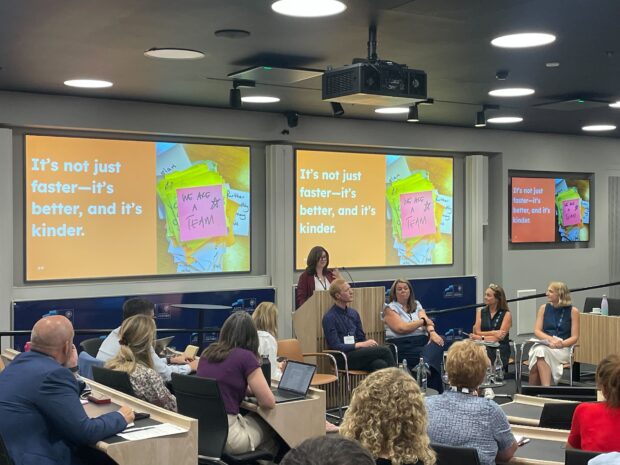
Hello! This is the first post for our new blog sharing all things test and learn: case studies, good practice, opportunities to participate, partner and collaborate, and stories from the people using test and learn approaches.
Change is needed and test and learn approaches are important to help us get there. They help us embrace complexity, reduce risk in our work by starting small to find out what works, and they’re people-centric bringing together people and communities to solve problems. Test and learn is central to the whole public sector and anybody interested in solving ‘public problems’ and making things better, whether in an organisation funded through public money or not.
Our aim with this blog is to work in the open to learn and share how to embed test and learn approaches. We’ll share lots of learning about what works and what does not; we won’t just celebrate or promote the work. We want to share deep learning and reflection to establish an open way of working which invites conversation, helpful feedback, and shares tools and approaches that others can use in their work. We are helping to build a movement, creating a network of like minded people who can influence change through networks and communities. Part of why we write is to connect to networks that already exist and help to connect others working in this way who are committed to public work that is brave and bold.
We keep our principles at the heart of the work
We’ve drafted some test and learn principles - these will most likely change as we learn more about embedding these approaches, but they drive our ways of working and help inform decision making. We’ve pulled out two themes we think are important for the writing we want to share on this blog. In future blog posts, we’ll share our principles and how they’ve developed.
We’re here to change the centre because that’s where the rules of the game are set
The premise is that there are brilliant public services that nourish individuals and communities and support human flourishing everywhere.
A civil servant in search of the future of public services need only get on a train to Liverpool or Barnsley to see it. But too often these examples are counter cultural, with the work happening against the grain.
Reform happens in the 1.7m postcodes across the country, but the rules around funding, regulation, permissions and policy are set in SW1.
We need to understand the things that need to change with as much specificity as possible. Vague language around freedoms and flexibility won’t help. We need real world evidence both for the case for change and for the alternatives. We want to show how this work happens and build connections between the people making change, wherever they are.
We value hands on experience
We believe that by involving the people who do the work and hold the relationship between the state and citizens, you do better work.
The ‘state’, as experienced by a citizen, is normally a person. It’s a social worker, or a housing officer, or a teacher. Most of the time they are involved in policy too late or their views seem to count for less than those whose job is policymaking.
By involving them fully you make fewer mistakes. You increase trust and legitimacy. You speed up delivery and you reduce risk. By co-designing and inviting challenges from citizens and civic society directly you create more value than you possibly could on your own.
Ways to keep up to date and get involved
This blog is just one of the ways we’ll work in the open and invite conversation. We have a Test, Learn and Grow community you can join on Linkedin. We also run events in collaboration with our Network Convenors and partners.
We're also a platform and showcase for others, if you’ve got an idea for a blog post get in touch to tell us what you’d like to share.
To get notified of new blog posts, you can subscribe for email notifications - on a desktop the sign up link is in the sidebar on the right, on a mobile it is at the bottom of the page.
Leave a comment